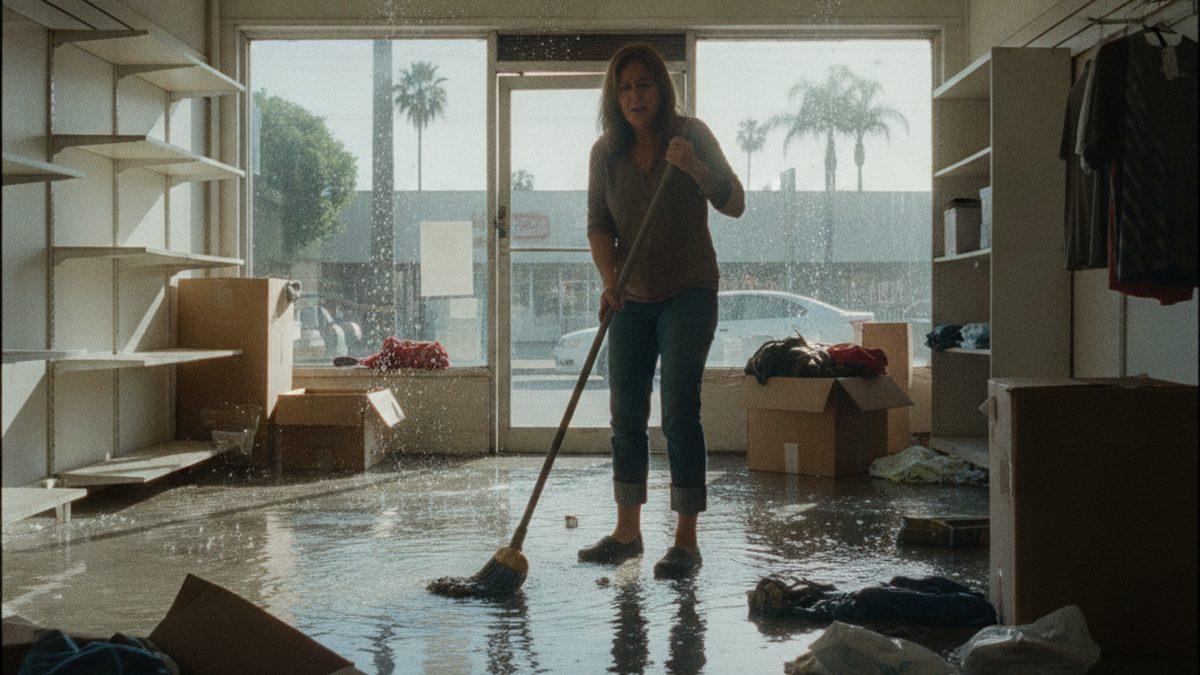
People usually ask me what happens if a business has no insurance in one of two moods. Either they are curious and a little skeptical (“Do I really need all this?”), or they are worried because something already went wrong and they just found out there was no policy to call.
I would much rather have the first conversation. So this article is my straight answer to both questions: why businesses need insurance in the first place, and what actually happens, legally and financially, when a California business operates without it.
I’m Shalom Samya, a licensed commercial insurance broker based in Tarzana (CA DOI license #OK30674). I’ve spent 15+ years in commercial insurance, working with contractors, truckers, restaurants, retailers, healthcare providers, tech companies and property managers across Los Angeles, the San Fernando Valley, California and 27+ other states.
A quick note before we start: I’m a broker, not an attorney. The legal points below are general and accurate to my understanding, but penalties and procedures depend on the specific facts. If you are already facing a claim, a stop order or a lawsuit without coverage, talk to a California attorney today.
The Short Answer: What Happens If a Business Has No Insurance
It depends on which insurance is missing. Some coverage is required by law, some is required by contracts, and some is “optional” only in the sense that nobody forces you to buy it until the day you need it.
Here is the pattern I see:
- Missing legally required coverage (workers’ comp, auto liability, certain licensing requirements) can lead to fines, stop orders, license suspension and even criminal charges.
- Missing contractually required coverage (general liability for a lease, a client contract or a vendor agreement) can put you in breach, cost you the contract, or trigger a default under your lease.
- Missing “voluntary” coverage (professional liability, cyber, EPLI, umbrella) means every covered-type loss comes straight out of the business, and sometimes out of your personal assets.
The common thread is simple. Insurance does not make bad things stop happening. It decides who pays when they do. Without it, the answer is you.
Why Businesses Need Insurance in the First Place
Before the consequences, it helps to be clear on the purpose. Most owners think of insurance as a cost line. I think of it as a transfer of risk you cannot afford to hold yourself.
Insurance pays for defense, not just damages
This is the part most people underestimate. A liability policy typically pays your lawyer to defend you, often in addition to the policy limit, even when the claim against you turns out to be baseless.
Being right does not make a lawsuit free. Without coverage, you pay to prove you did nothing wrong.
Insurance is a condition of doing business
In Los Angeles, it is hard to sign a commercial lease, bid a construction job, get on a general contractor’s approved vendor list, or work for a larger company without a certificate of insurance. Coverage is often the price of admission.
Insurance keeps one bad day from ending the company
A single injury, crash, fire, data breach or wrongful termination claim can be larger than a small business’s entire annual profit. Insurance turns an unpredictable, potentially fatal loss into a predictable annual cost.
Some of it is simply the law
California requires workers’ compensation for virtually every employer with employees, and it requires liability insurance on vehicles. Certain licenses, including contractor licenses, carry their own insurance and bond requirements. These are not recommendations.
If you want a full breakdown of which policies fit which businesses, my business insurance checklist walks through it question by question. This article focuses on the other side of the coin: the consequences of going without.
No Workers’ Comp in California: Legal Consequences
Workers’ compensation is where operating uninsured gets serious fastest. It is also the coverage I most often find missing in small businesses, usually because the owner believed one of a few common myths.
What the law requires
Under California Labor Code §3700, virtually every employer with even one employee must carry workers’ compensation insurance (or be approved by the state to self-insure, which is not realistic for most small businesses).
That includes part-time employees, seasonal help and family members on payroll. It can also include workers you pay as “independent contractors” if, under California’s worker classification rules, they are really employees.
Penalties for no workers’ comp in California
The penalties for no workers’ comp in California stack up in several layers. In general terms:
- It’s a crime. Failing to secure workers’ comp coverage is a criminal offense in California, generally a misdemeanor that can carry fines and possible jail time.
- Stop orders. The Labor Commissioner can issue a stop order that prohibits you from using employee labor until you get coverage. For many businesses, that means shutting down operations on the spot. Ignoring a stop order is its own offense.
- Civil penalties. The state can assess penalties, often calculated per employee, for the period you were uninsured. These can be significant even for a small crew.
- Loss of legal protections. Carrying comp normally limits what an injured employee can recover to the workers’ comp system. Without it, you lose much of that protection (more on that below).
The exact penalty amounts and procedures depend on the facts and can change, so I won’t quote specific figures here. The point is that the cost of getting caught is almost always far larger than the premium you avoided.
What happens when an uninsured employer’s worker gets hurt
This is the scenario that turns a compliance problem into a financial crisis.
If an employee is injured and you have no workers’ comp, the employee generally has options that a covered employer would not face. They can pursue workers’ comp benefits through the state system, and they may also be able to sue you directly in civil court.
In a civil suit against an uninsured employer, California law makes the employer’s position much weaker. Defenses that might otherwise be available, such as arguing the employee was partly at fault, can be limited, and the law can presume the employer was negligent. That means the injured worker’s path to a judgment against you is shorter.
The Uninsured Employers Benefit Trust Fund
California does not leave injured workers with nothing just because their employer broke the law. The Uninsured Employers Benefit Trust Fund (UEBTF) can pay benefits to injured workers of illegally uninsured employers.
Then the state comes looking for its money. The fund can pursue the employer to recover what it paid, plus penalties and costs. That can include liens and collection actions, and depending on the business structure and the facts, the owners themselves can end up exposed.
So you do not escape the cost of the injury. You just end up paying it to the state, with extra charges, on the state’s terms, instead of to an insurance company on yours.
The myths that lead here
In my experience, most uninsured employers are not trying to break the law. They believed something like:
- “I only have one part-time person, so I don’t need it.” (You do.)
- “They’re all 1099 contractors.” (Maybe, maybe not. California’s classification rules are strict.)
- “It’s my cousin helping out.” (If you pay them, they’re likely an employee.)
- “I’ll get it when I grow.” (The law applies from the first employee.)
If any of those sounds familiar, the fix is straightforward. My page on workers’ compensation in California explains how policies are priced (per $100 of payroll by class code) and how to get covered quickly.
Contractors: CSLB License Suspension and Lost Work
For contractors, missing insurance does not just create liability. It can take away your license to work.
Workers’ comp and your CSLB license
The Contractors State License Board (CSLB) requires contractors with employees to keep a valid workers’ comp certificate on file. If that coverage lapses or is cancelled, the carrier notifies CSLB, and the license can be suspended until proof of coverage is restored.
A suspended license creates a chain reaction. Work performed while suspended can be treated as unlicensed contracting, which can put your right to be paid for that work at risk, on top of the other penalties.
Requirements in this area have been tightening. Roofing contractors, for example, have been required to carry workers’ comp even without employees, and lawmakers have moved to broaden comp requirements for other license classifications. Requirements and effective dates have shifted over time, so confirm your current status directly with CSLB.
The license bond is separate
California contractors also need a $25,000 contractor license bond (the amount since January 1, 2023). A bond is not liability insurance. It protects consumers and others, and if the surety pays a claim, you owe the surety back. But letting it lapse can also lead to suspension. I cover the details on my contractor insurance in California page.
Liability without general liability
Contractors also face property damage and injury claims from homeowners, other trades and passersby. Without general liability, a water leak, a dropped tool or a fire started on the job becomes a claim against the business and, for many small contractors, against the owner personally.
And practically speaking, you will struggle to work for any GC, property manager or commercial client in Los Angeles without a certificate showing GL, and often additional insured status for them.
Driving Without Commercial Auto Insurance
Every vehicle on California roads needs liability insurance. Operating a business vehicle without it, or relying on a personal policy that excludes business use, creates problems on several fronts.
Legal consequences of an uninsured vehicle
Driving without the required insurance in California can lead to fines, suspension of driving privileges, and the vehicle being impounded, depending on the circumstances. Those consequences apply to any vehicle, not just commercial ones.
For reference, California’s minimum liability limits for private passenger vehicles rose to 30/60/15 on January 1, 2025. Those minimums are nowhere near enough for most businesses, and commercial vehicles, for-hire operations and trucking often require much higher limits.
Trucking and motor carriers
If you haul freight, the stakes are higher. Interstate carriers must keep FMCSA-required insurance filings in place, with minimum limits starting at $750,000 for many operations. If the filing lapses, operating authority can be revoked.
Within California, carriers operating under a CA DMV Motor Carrier Permit must also keep proof of insurance on file. A lapse can suspend the permit, which effectively parks your trucks.
The personal policy trap
A common version of “no insurance” is not actually zero insurance. It’s a personal auto policy on a vehicle used for business. Many personal policies exclude or limit business use, and if the carrier denies the claim after a crash, you are functionally uninsured for that loss.
The same applies to employees who run errands in their own cars. If they cause a serious accident while working for you, the injured party may come after your business. Hired and non-owned auto coverage is built for exactly that. My commercial auto insurance page covers the options.
Contractual Consequences of Operating Without Business Insurance
Operating without business insurance often breaks promises you already made in writing. Many owners sign contracts without reading the insurance section closely, and it catches up with them later.
Breach of contract
Client contracts, subcontract agreements and vendor agreements commonly require you to carry specific coverage, at specific limits, for the length of the contract. If you don’t have it, you may be in breach from day one, even if nothing ever goes wrong.
If something does go wrong, the other party can pursue you both for the loss and for failing to carry the insurance you promised. Indemnification clauses in those contracts can also make you responsible for their losses and legal costs.
Lost contracts and bids
The more immediate cost is opportunity. Without a certificate of insurance, you often cannot bid, cannot onboard as a vendor, and cannot start the job. Larger clients commonly ask for $1M per occurrence in general liability and often $1M combined single limit on auto, with additional insured endorsements.
I talk to business owners who lose work every month not because of price or quality, but because they could not produce a certificate in time.
Lease default
Most commercial leases in Los Angeles require general liability and often property coverage, with the landlord named as additional insured. If you don’t maintain it, you may be in default of your lease.
Depending on the lease, that can let the landlord buy coverage and bill you, charge fees, or in serious cases move toward terminating the lease. Losing your location over an insurance clause is an expensive way to learn to read the fine print.
Lender and franchise requirements
SBA loans, equipment financing and franchise agreements typically require insurance too. Letting coverage lapse can put you out of compliance with those agreements as well.
If you are not sure whether your current coverage satisfies your lease or contracts, that is exactly the kind of thing I review for free. Call me at (323) 999-6067 or request a free coverage review and send over the insurance section of the contract. I’ll tell you plainly what you have, what you’re missing, and what it would take to close the gap.
Uninsured Business Lawsuits: The Financial Consequences
An uninsured business lawsuit is expensive from the first day, whether or not you ultimately lose.
Defense costs hit even when the claim is meritless
Lawsuits cost money to defend regardless of merit. Attorneys have to respond to the complaint, handle discovery, take depositions, file motions and, if it goes that far, go to trial.
Legal fees vary widely, but even a relatively simple commercial dispute can run into tens of thousands of dollars, and a contested injury case can go far beyond that. When you have a liability policy, the carrier usually hires and pays defense counsel. When you don’t, every invoice is yours.
Settlement pressure
Without insurance, many owners end up settling claims they believe are unfair, simply because settling costs less than defending. Plaintiffs’ attorneys know this, and an uninsured defendant can be under more pressure to pay something just to make it go away.
On the flip side, some attorneys may be less interested in pursuing a small uninsured business with no assets. Do not count on that. If you own a home, equipment, receivables or savings, you are a target worth pursuing.
Judgments and collection
If you lose, the judgment is yours to pay. Judgment creditors in California can use tools like bank levies, liens on real property and wage garnishment to collect. A judgment can follow you for years.
The claims most likely to surprise you
From what I see, these are the claims uninsured owners least expect:
- Slip and fall at your location, including a delivery driver or a customer’s child.
- Damage at a client’s property while you’re working there.
- Professional mistakes, like a missed deadline, bad advice or a design error that costs a client money.
- Employment claims from a current or former employee, which can arise even in very small businesses. California’s FEHA harassment protections apply to employers with even one employee, and most other FEHA protections apply at five or more.
- Data breaches, which can trigger California notification obligations and, in some cases, consumer claims.
Uninsured Risks at a Glance
This table pulls it together: the risk, what can happen without coverage, and the coverage that typically responds. Coverage always depends on the actual policy wording, exclusions and limits.
| Uninsured risk |
Possible consequence without coverage |
Coverage that typically responds |
| Employee injured on the job |
Criminal exposure, stop order, penalties, civil suit with weakened defenses, UEBTF reimbursement claim |
Workers’ compensation and employer’s liability |
| Customer or visitor injured at your location |
Defense costs and any judgment paid by the business or owner |
General liability |
| Damage to a client’s property while working |
Paying for repairs, breach of contract, lost client |
General liability |
| Accident in a business vehicle |
Fines, license suspension, impound, lawsuit from injured parties |
Commercial auto |
| Employee crashes their own car on an errand |
Business named in the lawsuit |
Hired and non-owned auto |
| Professional error or missed deadline |
Client sues for financial loss, defense costs |
Professional liability (E&O) |
| Harassment, discrimination or wrongful termination claim |
Defense costs, settlement or judgment |
Employment practices liability (EPLI) |
| Data breach or ransomware |
Notification costs, forensics, downtime, possible customer claims |
Cyber liability |
| Judgment larger than your primary limits |
Excess amount paid by the business or owner |
Umbrella / excess liability |
| Contractor lapses on comp or bond |
CSLB license suspension, payment disputes on work done while suspended |
Workers’ comp and contractor license bond |
| Lease or contract requires insurance you don’t have |
Breach, lease default, lost contract |
Whatever the contract specifies, usually GL, auto, comp and umbrella |
Personal Asset Exposure: Does Your LLC Protect You?
This is where the question “what happens if a business has no insurance” becomes “what happens to me.” The answer depends heavily on how your business is set up, and on your own conduct.
Sole proprietors and general partners
If you operate as a sole proprietor, there is no legal separation between you and the business. A judgment against the business is a judgment against you. Your savings, your home equity and other personal assets can be reached, subject to whatever protections California law gives debtors.
General partners are in a similar position. Each partner can be personally responsible for partnership debts, including debts caused by another partner’s actions.
LLCs and corporations: the veil is not absolute
Forming an LLC or corporation is smart. It generally keeps business debts at the business level. But I often meet owners who believe their LLC is a substitute for insurance. It is not.
Here are the most common ways that protection breaks down:
- Your own negligence. If you personally cause an injury, such as by driving the truck or doing the work, you can be sued personally for your own actions regardless of the entity.
- Personal guarantees. Most small business leases, loans and many vendor agreements require the owner to personally guarantee them. If the business can’t pay, you do.
- Piercing the corporate veil. California courts can disregard the entity under the alter ego doctrine, typically where the owner treated the business as an extension of themselves: commingling funds, undercapitalizing the business, ignoring formalities.
- Certain statutory liabilities. Some obligations, including certain tax and wage-related liabilities, can reach responsible individuals depending on the law and the facts.
- Your business is your biggest asset. Even if your house is safe, a judgment can wipe out the company you spent years building.
Entity type vs. personal exposure
This table is a simplified, general comparison, not legal advice. Talk to a California attorney or CPA about your specific structure.
| Entity type |
General personal exposure to business liabilities |
Where owners still get exposed |
Why insurance still matters |
| Sole proprietorship |
High. No legal separation between owner and business. |
Essentially every business debt and judgment |
Insurance is often the main thing standing between a claim and your personal assets |
| General partnership |
High. Partners can be liable for partnership debts. |
Including debts caused by other partners |
Protects each partner from the others’ mistakes |
| LLC (single or multi-member) |
Generally limited to the business’s assets |
Own negligence, personal guarantees, veil piercing, commingled funds |
Pays defense and claims so the business survives and the veil is never tested |
| S corp or C corp |
Generally limited to the corporation’s assets |
Own negligence, personal guarantees, alter ego claims, certain statutory liabilities |
Same as LLC, plus often required by investors, lenders and larger clients |
The way I explain it to clients: the entity is a wall, insurance is the fire department. You want both. A wall helps, but you would still rather the fire never reach it.
Hypothetical Scenarios: What Uninsured Losses Look Like
The scenarios below are hypothetical and illustrative only. They are not real clients or real cases, and outcomes in real life depend on the specific facts, contracts and law. I include them because it is easier to see the consequences when they are laid out step by step.
Hypothetical 1: The Valley remodeler with “just one helper”
Imagine a small remodeling contractor in the San Fernando Valley who pays one helper in cash and assumes workers’ comp is only for bigger crews. The helper falls from a ladder and breaks a wrist.
The helper’s medical bills and lost wages don’t disappear. The helper could seek benefits through the state system, with the UEBTF potentially paying and then pursuing the contractor for reimbursement, or could sue directly. The state could also look at penalties and a stop order. If the contractor’s workers’ comp status on file with CSLB is wrong, the license itself may be at risk.
With a workers’ comp policy, the carrier would typically handle the claim, pay medical and wage benefits, and the contractor would keep working.
Hypothetical 2: The consultant and the missed deadline
Imagine an independent consultant operating as a sole proprietor. A client claims a deliverable was late and incorrect, causing them to miss a regulatory filing and lose money. They sue for their losses.
General liability usually won’t respond to a purely financial loss from professional services. Without professional liability, the consultant pays an attorney out of pocket. As a sole proprietor, any judgment could reach personal savings. Even if the consultant wins, the defense costs are gone.
With a professional liability (E&O) policy, the carrier would typically provide a defense and pay covered damages up to the limit, subject to the deductible and policy terms.
Hypothetical 3: The restaurant with an expired certificate
Imagine a restaurant owner whose general liability policy lapsed during a slow season because a payment was missed. A guest slips on a wet floor near the restroom and is seriously hurt.
There is no carrier to call. The owner hires a lawyer personally. The landlord, who required GL with additional insured status in the lease, may also be named in the lawsuit and could look to the tenant for indemnity. The owner may now be defending the injury claim and dealing with a lease default at the same time.
With coverage in force, the carrier would typically defend both the restaurant and, if properly endorsed, the landlord.
Hypothetical 4: The delivery driver in a personal car
Imagine a retail shop owner in Los Angeles who asks an employee to drop off an order using the employee’s own car. The employee runs a red light and injures another driver.
The employee’s personal auto policy may respond first, but the limits could be low, or coverage could be disputed because the trip was for business. The injured driver’s attorney names the shop as well. Without hired and non-owned auto coverage, the shop may have no insurance to defend it.
Hypothetical 5: The judgment that exceeds the limits
Imagine a small trucking company that carries the minimum required auto liability. A serious multi-vehicle accident leads to claims far beyond the policy limit.
This one is not about having no insurance. It’s about having too little. The primary policy pays up to its limit, and anything above it is the company’s responsibility. An umbrella or excess policy is designed for exactly this gap.
Other Consequences Owners Don’t See Coming
Paying more when you finally buy coverage
A gap in coverage can make insurance harder to place later. Carriers ask about prior coverage and lapses. A business with a history of going uninsured, or with an uninsured claim, may face fewer carrier options or higher pricing.
Losing the ability to collect
For contractors, working with a suspended license can put your right to be paid at risk. For other businesses, being in breach of an insurance clause can give a client leverage in a payment dispute.
Personal stress and time
I don’t want to overdramatize this, but it’s real. Defending an uninsured claim takes hours of your time, pulls your attention away from running the business, and can go on for a year or more. A claims team and defense attorney paid by an insurer take most of that off your plate.
Employees and reputation
An employee who gets hurt and discovers there is no workers’ comp is unlikely to stay loyal. Word travels, especially in trades where crews know each other. And larger clients increasingly verify coverage before they sign.
What to Do If You Are Currently Uninsured
If you are reading this because you realized you have a gap, don’t panic. Most gaps can be fixed quickly if you move now.
1. Start with what the law requires
If you have employees, get workers’ comp in place first. If you use vehicles for business, make sure they’re covered for business use. If you’re a contractor, confirm what CSLB has on file for you.
2. Pull your contracts and lease
Find the insurance section in your lease, client agreements and subcontracts. Write down the required coverages, limits and endorsements. That list tells you what you are already obligated to carry.
3. Be honest with your broker
Tell your broker about any prior gaps, open claims or known incidents. Insurance generally doesn’t cover losses you already know about, and hiding them can create coverage problems later. A good broker would rather know up front and find the right market.
4. If something already happened, get legal advice
If there’s already an injury, accident or lawsuit and you had no coverage, new insurance won’t reach back and cover it. Talk to a California attorney about your options, then fix the coverage going forward.
5. Budget realistically
Costs vary a lot by class code, payroll, revenue, location, claims history and carrier, so I never promise a price before seeing the facts. My guide on how much business insurance costs gives broad ranges to help you plan.
In my experience, the owners who go uninsured usually overestimate the cost of coverage and underestimate the cost of a claim. Getting real quotes tends to fix both.
How I Help Businesses Close These Gaps
My view is that clients need a partner who understands their business, fights for the rate and is available when something goes wrong, not someone who just hands over a policy. That matters most when you’re starting from zero or recovering from a lapse.
Here’s how I typically approach it:
- Review what you actually do, not just your industry label, including employees, vehicles, contracts and where you work.
- Identify legal and contractual must-haves first, then the coverages that protect you from the losses most likely to hurt.
- Shop multiple carriers so you see real options instead of one take-it-or-leave-it quote.
- Get certificates issued quickly when a contract or lease is waiting on you.
- Stay available when a claim happens, in English, Hebrew or Spanish.
I work with businesses in Los Angeles, the San Fernando Valley, across California and in 27+ other states, from one-person operations to established companies with fleets and large payrolls.
Frequently Asked Questions
Is it illegal to run a business without insurance in California?
There is no single law requiring every business to carry every type of insurance. But workers’ comp is required for virtually every employer with employees, vehicles need liability coverage, and some licenses (like contractor licenses) have their own requirements. Operating without legally required coverage can bring fines, stop orders, license suspension and criminal charges.
What are the penalties for no workers’ comp in California?
Failing to carry required workers’ comp is a crime in California. The Labor Commissioner can issue stop orders and assess penalties, often per employee. If a worker is injured, you can face a civil lawsuit with weakened defenses and reimbursement claims from the Uninsured Employers Benefit Trust Fund.
Can I be personally sued if my business has no insurance?
Yes, depending on your structure and conduct. Sole proprietors and general partners generally have direct personal exposure. LLC and corporation owners can still be sued for their own negligence, on personal guarantees, or if a court pierces the corporate veil.
Does an LLC replace the need for business insurance?
No. An LLC can limit personal exposure, but it doesn’t pay legal fees or judgments. Without insurance, the LLC’s own assets pay, which can end the business even if your personal assets are protected.
Will insurance cover a claim that happened before I bought the policy?
Generally no. Insurance covers future losses under the policy terms. If something already happened while you were uninsured, talk to an attorney, and disclose known incidents to your broker when applying for new coverage.
What happens if my business insurance lapses for non-payment?
You can be uninsured for any loss during the gap, out of compliance with contracts and your lease, and for contractors, at risk of CSLB license suspension if workers’ comp lapses. Call your broker right away. Sometimes a policy can be reinstated, but that isn’t guaranteed.
Can a small business survive a lawsuit without insurance?
Some do, but defense costs alone can be significant even for meritless claims, and a judgment can exceed what a small business earns in a year. Insurance exists so that one bad claim doesn’t decide whether the business survives.
What coverage should I get first if I have none?
Start with what’s legally required: workers’ comp if you have employees and commercial auto if you drive for business. Then add general liability, which most leases and contracts require, and build from there based on your specific risks.
If you’re operating without coverage, or you’re not sure your current policies actually cover what you think they do, let’s fix it before it matters. Call me at (323) 999-6067 or schedule a free coverage review. I’ll look at your business, your contracts and your current coverage, and tell you exactly where you stand.